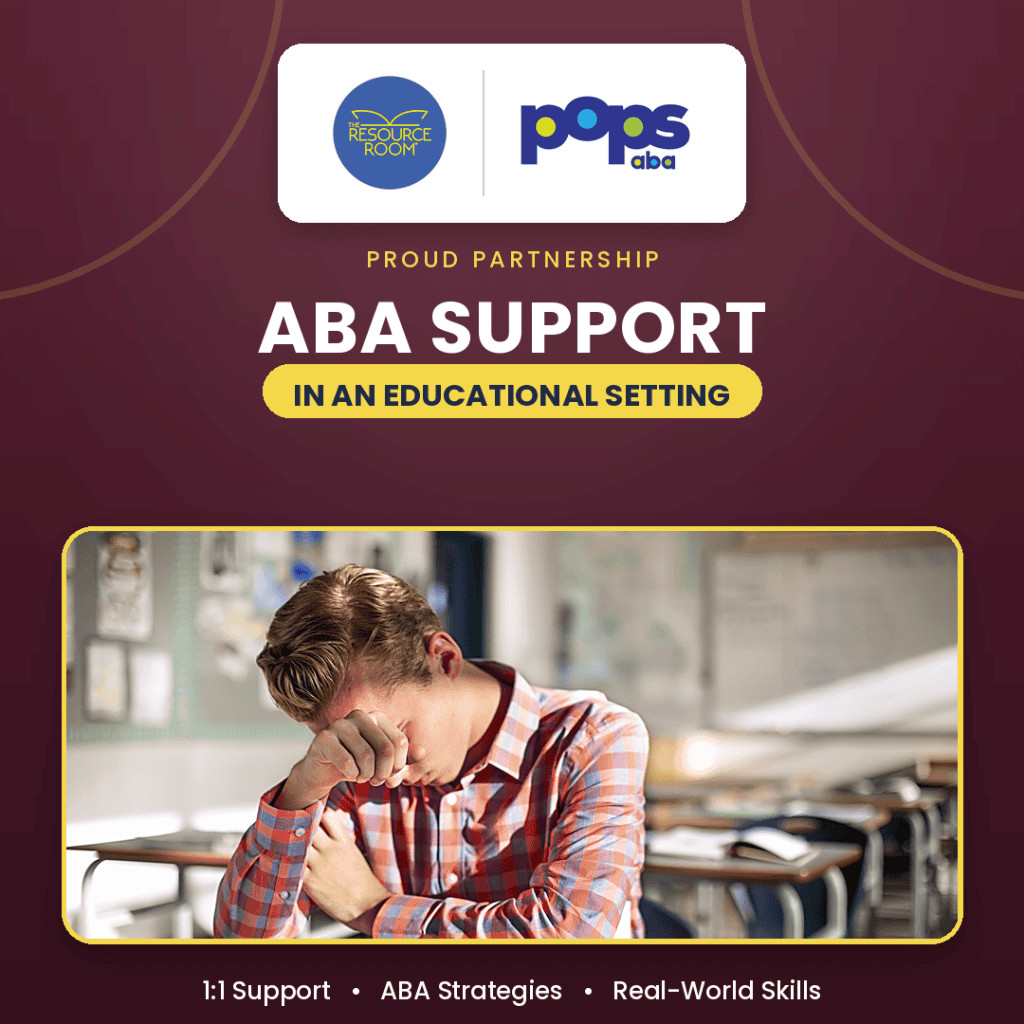
If you’ve researched ABA, you may have encountered strong opinions. Some families worry it can feel rigid, repetitive, or focused on compliance over the child. We share those concerns, and that’s exactly why this partnership exists.
Our model is built on a simple belief: the goal is never to replace learning with therapy or to add hours for the sake of adding hours. The goal is to help students access learning more effectively by supporting the behavioral, social, emotional, and functional skills that make learning possible.

This model gives students support in real educational settings, where academic expectations, peer interaction, group dynamics, transitions, and real-world challenges naturally occur. For many students, that’s where the most meaningful growth happens.
Why ABA in an Educational Setting Matters
ABA is often delivered at home, in a clinic, or in one-on-one therapy rooms. Those settings have value, but students also need to practice skills where they’re actually expected to use them. An educational setting provides that.
Real Learning Demands
Working through challenging assignments, following directions, receiving feedback, and persisting when a task gets hard.
Real Social Expectations
Practicing communication, cooperation, group participation, conflict management, and flexibility where it counts.
Real Independence Skills
Building transitions, routines, self-advocacy, task completion, emotional regulation, and future readiness.
The Skills Behind Academic Success
Many skills that drive academic success aren’t purely academic. A student may know how to solve the math problem but shut down when it feels overwhelming. They may understand the reading but struggle to join the discussion. They may want independence but need help learning to organize, ask for help, or move through a routine without frustration.
These aren’t separate from education. They’re often the very skills that determine whether a student can access their education.
ABA support may help with:
- Starting and completing academic tasks
- Managing frustration during hard assignments
- Transitioning between activities
- Accepting feedback or correction
- Participating in group instruction
- Handling disagreement appropriately
- Communicating needs clearly
- Building independence and self-advocacy
A Rare Partnership Between Education and ABA
This collaboration is uncommon. In most educational environments, outside ABA providers can’t work directly with students during the school day. Families are left coordinating school, tutoring, therapy, and home routines separately.
Resource Room is building a more connected model, giving families clinical support that understands how a student functions in a real educational environment, not just a clinic. The result is a more complete picture of the student, the expectations, and the skills they need for greater independence.

Meet Hunter Weber,
M.A., BCBA, LBA
The reason we’re confident in this partnership is the person leading it. Hunter is a Board Certified Behavior Analyst who cares deeply about providing the right support for each student, not a one-size-fits-all program.
Hunter has extensive experience supporting adolescents and young adults in communication, social development, independence, emotional regulation, and life skills. That matters: middle schoolers, high schoolers, and adult learners are often underserved in ABA, where services traditionally focus on early childhood.
His approach is individualized, practical, and centered on long-term growth. Hunter believes every student has strengths worth building on, and his work focuses on helping them discover and practice the skills that lead to greater independence, stronger relationships, and more successful participation in school, home, community, and future work.
Hunter’s focus includes:
- Supporting adolescents, older students, and young adults
- Building communication and social problem-solving
- Developing independence and flexibility
- Strengthening emotional regulation and life skills
- Practicing communication in real-world contexts
- Developing workplace readiness
- Helping students feel supported, challenged, and valued
How Families Can Use ABA Support
Families pursue ABA in different ways. For many, most ABA services still happen outside the educational setting: home-based support, parent consultation, or independent living routines. The unique opportunity here is that ABA can also coordinate with real educational services.
With One-on-One Educational Support
For students in tutoring or individualized instruction, ABA may support attention, task initiation, frustration tolerance, communication, flexibility, organization, and independence during academic work.
With Pathways Academy
For Pathways students, ABA can be woven into the school environment, focusing on group dynamics, cooperation, communication, conflict management, emotional regulation, and real-world readiness.
Services Recommended With Purpose
Families should feel confident that support is recommended for the right reasons. This partnership is not about adding hours for the sake of it. It’s about helping students build functional skills, increase independence, and participate more successfully in real-world environments.
ABA services should always be individualized, appropriate, and connected to meaningful goals for the student and family. That’s the standard we hold.
Frequently Asked Questions
Does ABA replace tutoring or academic instruction?
No. The goal is never to replace academic instruction with therapy. It’s to help students access learning more effectively by supporting the behavioral, social, emotional, and functional skills that make learning possible.
Can ABA support be used with one-on-one tutoring?
Yes. Families may explore ABA that coordinates with one-on-one educational support, especially when a student needs help with task initiation, frustration tolerance, flexibility, communication, or independence during academic work.
Can ABA support be used with Pathways Academy?
Yes. For Pathways students, ABA support may be incorporated into the educational environment, particularly around group dynamics, cooperation, emotional regulation, conflict management, and real-world readiness.
Will all ABA services happen at Resource Room?
Not necessarily. Many families use the majority of their ABA services outside the educational setting, including home-based support, parent consultation, or independent living routines. Resource Room provides the opportunity for some support to occur alongside educational services.
Why is this model rare?
In many school environments, outside ABA providers can’t work directly with students during the day. Resource Room and Pathways Academy offer a more flexible private setting where educational support and behavior support work together meaningfully.
What makes Hunter’s approach a good fit for older students?
Hunter has experience supporting adolescents, young adults, and adult learners in communication, social development, independence, emotional regulation, life skills, and workplace readiness. This matters because older students are often underserved in ABA compared with younger children.
Education. Behavior Support. Real Growth.
Students don’t build independence in isolation. They build it by practicing in real settings, with real expectations and the right support. Let’s talk about whether this is right for your child.
Contact Resource Room
Learn About Pathways Academy
Learn@ResourceRoomNC.com · 984-777-1244 · Holly Springs, NC